
Introduction
QT800-2 is a spheroidal graphite iron casting grade covered by GB/T 1348. Typical applications include gear blanks, transmission components, crankshafts and machinery parts.
| Field | Value |
|---|---|
| Designation | QT800-2 |
| Material Type | Cast Iron |
| Sub Type | Ductile Cast Iron |
| Product Form | casting |
Manufacturing Process
Sand Casting
Shell Molding Casting
Lost Foam Casting
Equivalent Materials
| Standard | Material Grade |
|---|---|
| NBN 830-02 | FNG80-2 |
| IS 1865 | SG800/2 |
| SAE J434 | D800 |
| AS 1831 | 800-2 |
| NF A32-201 | FGS800-2 |
| ISO 1083 | ISO 1083/JS/800-2/S |
| BS 2789 | 800/2 |
| NS11 301 | SJK-800 |
| GB 1348 | QT800-2 |
| EN 1563 | EN-GJS-800-2 |
| UNI 4544 | GS800-2 |
| JIS G5502 | FCD800 |
| UNF | FGE80-2 |
| SS 14 07 | 0864-03 |
| ASTM A536 | 120-90-02 |
| DIN 1693-1 | GGG-80 |
Similar Materials
N/A
Reference Standards
| Standard | Standard Title | Edition | Specification | Identifier |
|---|---|---|---|---|
| GB/T 1348 | Spheroidal graphite iron castings | 2019 | QT800-2 | — |
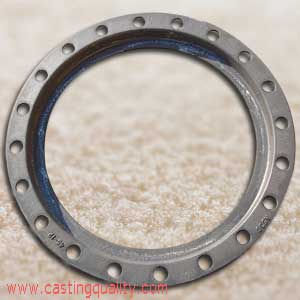
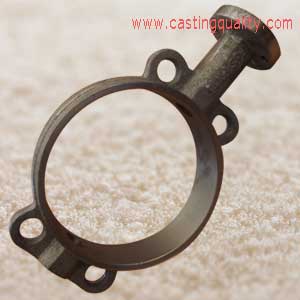
Related Casting Products


Physical Properties
| Property | Value / Unit | Note | Source |
|---|---|---|---|
| Elastic Modulus | 176 GPa | measured at room temperature unless otherwise stated, not an acceptance limit | GB/T 1348 |
| Poisson Ratio | 0.275 | measured at room temperature unless otherwise stated, not an acceptance limit | GB/T 1348 |
| Thermal Conductivity | 31.1 W/(m·K) | Test at 300 °C; measured at room temperature unless otherwise stated, not an acceptance limit | GB/T 1348 |
| Specific Heat | 515 J/(kg·K) | measured at room temperature unless otherwise stated, not an acceptance limit; Temperature range: 20–500 °C | GB/T 1348 |
| Thermal Expansion | 12.5 ×10⁻⁶/K | measured at room temperature unless otherwise stated, not an acceptance limit; Temperature range: 20–400 °C | GB/T 1348 |
| Density | 7.2 kg/dm³ | measured at room temperature unless otherwise stated, not an acceptance limit | GB/T 1348 |
| Maximum Magnetic Permeability | 501 µH/m | measured at room temperature unless otherwise stated, not an acceptance limit | GB/T 1348 |
| Hysteresis Loss | 2700 J/m3 | measured at room temperature unless otherwise stated, not an acceptance limit; B = 1 T | GB/T 1348 |
| Electrical Resistivity | 0.54 µΩ·m | measured at room temperature unless otherwise stated, not an acceptance limit | GB/T 1348 |
Chemical Composition
No specified chemical composition limits in GB/T 1348
Heat Treatment
GB/T 1348–2019
Heat treatment may be required under agreed delivery or retesting conditions. No grade-specific heat-treatment temperature or holding schedule is prescribed.
Mechanical Properties
Core Mechanical Properties
Conditions are not identical. Compare each stated condition and applicability separately.
GB/T 1348 — 2019 · Table 1 — Normative
| Property | t ≤ 30 mm |
|---|---|
| Yield Strength (Rp0.2) | ≥ 480 MPa |
| Tensile Strength | ≥ 800 MPa |
| Elongation | ≥ 2 % |
Common specimen condition: Separately cast, cast-on or side-by-side cast sample
Full original column conditions
- t ≤ 30 mm — Separately cast, cast-on or side-by-side cast sample · t ≤ 30 mm
- wall thickness ≤ 30 mm; L0 = 5d; GB/T 228.1; Minimum prescribed value
GB/T 1348 — 2019 · Table C.1 — Informative
| Property | t ≤ 30 mm |
|---|---|
| Yield Strength (Rp0.2) | ≥ 460 MPa |
| Tensile Strength | ≥ 780 MPa |
| Elongation | ≥ 2 % |
Full original column conditions
- t ≤ 30 mm — Specimen cut from the casting · t ≤ 30 mm
- source designation QT800-2/C; sampling position and acceptance properties subject to agreement; wall thickness ≤ 30 mm; L0 = 5d; GB/T 228.1; Informative minimum guideline, not an unconditional acceptance requirement; Informative reference value; not an acceptance requirement
GB/T 1348 — 2019 · Table G.1 — Informative
| Property | Value |
|---|---|
| Shear Strength | 720 MPa |
| Compressive Strength | 1150 MPa |
- Annex G informative reference data; measured at room temperature unless otherwise stated, not an acceptance limit; Informative reference value; not an acceptance requirement
GB/T 1348 — 2019 · Table G.2 — Informative
| Property | t ≤ 30 mm |
|---|---|
| Tensile Strength | 800 MPa |
Full original column conditions
- t ≤ 30 mm — Specimen cut from casting · diameter ≤25 mm · t ≤ 30 mm
- wall thickness ≤ 30 mm; Informative guideline; stress-controlled fatigue; N = 10^7 cycles, failure probability P = 50% for fatigue data; not an acceptance requirement; Informative reference value
Additional Mechanical Properties
Fatigue Properties
Conditions are not identical. Compare each stated condition and applicability separately.
GB/T 1348 — 2019 · Table G.2 — Informative
| Property | Test window 1 | Test window 2 |
|---|---|---|
| Notched Rotating Bending Fatigue Strength | 192 MPa[1] | — / Not specified |
| Notched Rotating Bending Fatigue Ratio | 0.24[2] | — / Not specified |
| Reversed Tension Compression Fatigue Strength | — / Not specified | 272 MPa[3] |
| Reversed Tension Compression Fatigue Ratio | — / Not specified | 0.34[2] |
| Pulsating Tension Fatigue Strength | — / Not specified | 381 MPa[4] |
| Reversed Torsional Fatigue Strength | — / Not specified | 240 MPa[5] |
| Reversed Torsional Fatigue Ratio | — / Not specified | 0.30[2] |
| Rotating Bending Fatigue Strength | — / Not specified | 312 MPa[6] |
| Rotating Bending Fatigue Ratio | — / Not specified | 0.39[2] |
- diameter ≤25 mm; relevant wall thickness t ≤30 mm; t ≤ 30 mm; wall thickness ≤ 30 mm; Informative guidance, not an acceptance requirement; The source cycle-count wording is inconsistent; N = 10^7 cycles (10 million), P = 50% reference: ISO 1083:2018 Table G.2 footnotes b/c; Supplemental reference; not an official GB corrigendum; Stress-controlled fatigue according to Wöhler; Informative reference value; not an acceptance requirement
- Test window 1: Notched specimen, Kt ≤3 machined from a sample cut from casting
- Test window 2: Unnotched specimen machined from a sample cut from casting
Fracture Toughness
GB/T 1348 — 2019 · Table G.1 — Informative
| Property | Value |
|---|---|
| Fracture Toughness (KIC) | 14 MPa√m |
- Annex G informative reference data; measured at room temperature unless otherwise stated, not an acceptance limit; Informative reference value; not an acceptance requirement
Other Mechanical Properties
GB/T 1348 — 2019 · Table G.1 — Informative
| Property | Value |
|---|---|
| Torsional Strength | 720 MPa |
- Annex G informative reference data; measured at room temperature unless otherwise stated, not an acceptance limit; Informative reference value; not an acceptance requirement
Notes
GB/T 1348 · Edition 2019
[1] Notched Rotating Bending Fatigue Strength: R = -1; approximately 21.8%; Kt ≤ 3; σbwk(R=-1)/Rm ≈ 0.40 - 0.0002 × Rm; Mean source-strength, not a guaranteed limit
[2] Notched Rotating Bending Fatigue Ratio/Reversed Tension Compression Fatigue Ratio/Reversed Torsional Fatigue Ratio/Rotating Bending Fatigue Ratio: Source-not a calculated value
[3] Reversed Tension Compression Fatigue Strength: R = -1; approximately 22.3%; σw/Rm ≈ 0.50 - 0.0002 × Rm; Mean source-strength, not a guaranteed limit
[4] Pulsating Tension Fatigue Strength: R = 0; σmax = 2σ; approximately 9%; σ(R=0)/σ(R=-1) ≈ 0.7; Mean source-strength, not a guaranteed limit
[5] Reversed Torsional Fatigue Strength: R = -1; approximately 14%; τw/Rm ≈ 0.46 - 0.0002 × Rm; Mean source-strength, not a guaranteed limit
[6] Rotating Bending Fatigue Strength: R = -1; approximately 14.2%; σw/Rm ≈ 0.55 - 0.0002 × Rm; Mean source-strength, not a guaranteed limit
Welding Conditions
N/A
Applications
Ductile iron GB/T 1348 Grade QT800-2 is used for gear blanks, transmission components, crankshafts and machinery parts. Such castings are used in industrial drives, agricultural machinery, engines and off-highway equipment. Component selection depends on section size, loading and the required finished surface. Wear performance or fatigue life cannot be inferred from the grade name alone; any surface treatment and associated acceptance requirements must be specified for the actual part.
Need QT800-2 Castings?
Contact us for casting and machining inquiries.
Email Us for a QuoteLast Updated: November 6, 2026