
Introduction
120-90-02 is a ductile cast iron grade covered by ASTM A536. Typical applications include gear and pinion castings, rollers and sliding machine parts.
| Field | Value |
|---|---|
| Designation | 120-90-02 |
| Material Type | Cast Iron |
| Sub Type | Ductile Cast Iron |
| Product Form | casting |
Manufacturing Process
Sand Casting
Shell Molding Casting
Lost Foam Casting
Equivalent Materials
| Standard | Material Grade |
|---|---|
| NBN 830-02 | FNG80-2 |
| IS 1865 | SG800/2 |
| SAE J434 | D800 |
| AS 1831 | 800-2 |
| NF A32-201 | FGS800-2 |
| ISO 1083 | ISO 1083/JS/800-2/S |
| BS 2789 | 800/2 |
| NS11 301 | SJK-800 |
| GB 1348 | QT800-2 |
| EN 1563 | EN-GJS-800-2 |
| UNI 4544 | GS800-2 |
| JIS G5502 | FCD800 |
| UNF | FGE80-2 |
| SS 14 07 | 0864-03 |
| DIN 1693-1 | GGG-80 |
| GB/T 1348 | QT800-2 |
Similar Materials
N/A
Reference Standards
| Standard | Standard Title | Edition | Specification | Identifier |
|---|---|---|---|---|
| ASTM A536 | Standard Specification for Ductile Iron Castings | 84(1999)e1 | 120-90-02 | — |
Related Casting Products
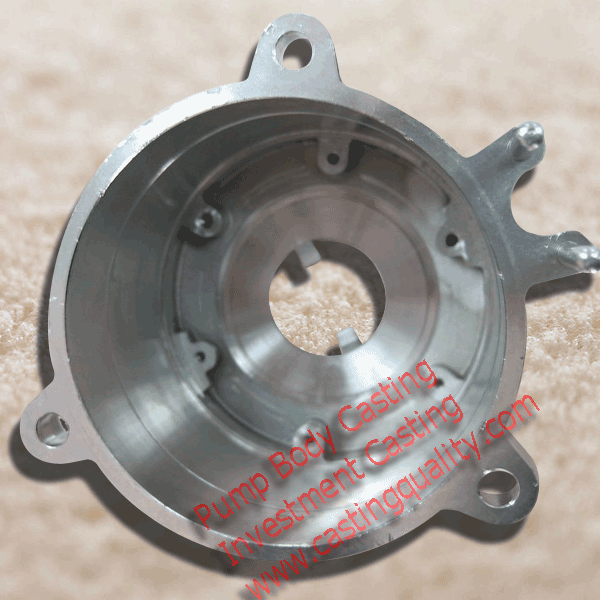


Physical Properties
N/A
Chemical Composition
No specified chemical composition limits in ASTM A536
Heat Treatment
ASTM A536–84(1999)e1
The guidance identifies quenching and tempering, normalizing and tempering, or isothermal heat treatment as alternative routes, without prescribing temperatures, holding times or cooling parameters. Quenching to martensite and tempering may substantially reduce fatigue strength compared with as-cast material of the same hardness.
Mechanical Properties
Core Mechanical Properties
ASTM A536 — 84(1999)e1 · Table 1 — Normative
- Standard round tensile specimen, 2 in. or 50 mm gauge length; small-size alternatives for 1/2-in. Y-block per Clause 11.1; General-use ductile iron castings; Test coupons represent the same ladle or heat and receive the same thermal treatment as the castings. Coupon size is selected by the purchaser, or by the manufacturer if not specified. No quantitative coupon-to-casting property relationship is prescribed.
ASTM A536 — 84(1999)e1 · Table 1 — Informative
- Standard round tensile specimen, 2 in. or 50 mm gauge length; small-size alternatives for 1/2-in. Y-block per Clause 11.1; General-use ductile iron castings; Test coupons represent the same ladle or heat and receive the same thermal treatment as the castings. Coupon size is selected by the purchaser, or by the manufacturer if not specified. No quantitative coupon-to-casting property relationship is prescribed.
Notes
ASTM A536 · Edition 84(1999)e1
[1] Tensile Strength: Chemical requirements may be agreed between manufacturer and purchaser. Hardness requirements apply only when specified in the contract or purchase order; no numerical hardness limit is prescribed. Special microstructure, pressure-tightness, radiographic, magnetic-particle, dimensional and surface-finish requirements apply only when specified in the contract or purchase order.
[2] Yield Strength: Yield strength is determined at 0.2% offset; another method requires mutual agreement.
[3] Elongation: Elongation gauge length: 2 in. or 50 mm. For a 1/2-in. Y-block use a permitted small-size specimen.
[4] Tensile Strength: The inch-pound values govern. SI values reproduce the printed and are not independent requirements.; Informative reference value; not an acceptance requirement
[5] Yield Strength: Yield strength is determined at 0.2% offset; another method requires mutual agreement.; The inch-pound values govern. SI values reproduce the printed and are not independent requirements.; Informative reference value; not an acceptance requirement
Welding Conditions
N/A
Applications
Ductile cast iron ASTM A536 Grade 120-90-02 is used for gear and pinion castings, rollers and sliding machine parts. Other cast components used in this material family include gear and transmission components, hubs, brackets, machine housings and pump-related castings. Applications include agricultural, construction and general industrial machinery.
Lifting, low-temperature and pressure-retaining duties require the relevant component-specific requirements; ordinary family uses do not establish those capabilities.
Need 120-90-02 Castings?
Contact us for casting and machining inquiries.
Email Us for a QuoteLast Updated: November 6, 2026