
G42CrMo4 (EN 1.7231) Low-Alloy Steel Casting Material
Low-Alloy Steel
Introduction
G42CrMo4 is a low-alloy steel casting grade covered by EN 10293. Typical family applications include gear-related castings, couplings, housings, connecting parts and structural supports.
| Field | Value |
|---|---|
| Designation | G42CrMo4 (EN 1.7231) |
| Material Type | Alloy Steel |
| Sub Type | Low-Alloy Steel |
| Product Form | casting |
Manufacturing Process
Investment Casting
Shell Molding Casting
Sand Casting
Equivalent Materials
N/A
Similar Materials
N/A
Reference Standards
| Standard | Standard Title | Edition | Specification | Identifier |
|---|---|---|---|---|
| EN 10293 | Steel castings — Steel castings for general engineering uses | 2015 | G42CrMo4 | — |
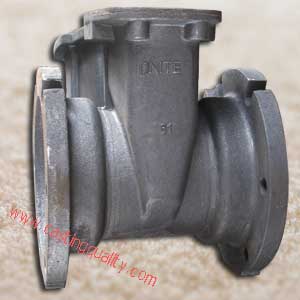
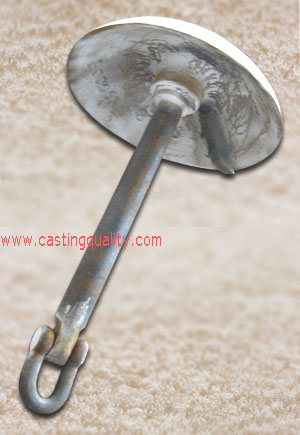
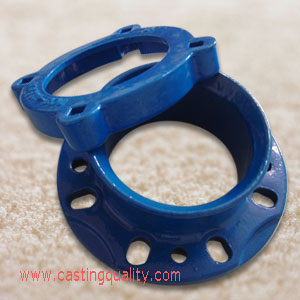
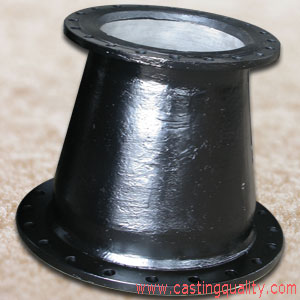
Related Casting Products
Physical Properties
N/A
Chemical Composition
| Element | EN 10293Edition 2015 · wt.%Cast analysis |
|---|---|
| C | 0.38–0.45 |
| Si | ≤ 0.60 |
| Mn | 0.60–1.00 |
| P | ≤ 0.025 |
| S | ≤ 0.020[1] |
| Cr | 0.80–1.20 |
| Ni | ≤ 0.40[2] |
| Mo | 0.15–0.30 |
| Cu | ≤ 0.30[2] |
| V | ≤ 0.05[2] |
Notes
EN 10293 · Edition 2015
[1] S: For castings of ruling thickness <28 mm, sulfur up to 0.030 wt.% is permitted.
[2] Ni/Cu/V: Applies only where unspecified in unless otherwise agreed; no intentional addition except for finishing the heat.
Heat Treatment
EN 10293–2015 · +QT1
| Step | Operation | Temperature | Cooling |
|---|---|---|---|
| 1 | Informative: quenching | 880–950 °C | liquid |
| 2 | Informative: tempering | 600–650 °C | — |
EN 10293–2015 · +QT2
| Step | Operation | Temperature | Cooling |
|---|---|---|---|
| 1 | Informative: quenching | 880–950 °C | liquid |
| 2 | Informative: tempering | 550–600 °C | — |
Mechanical Properties
Core Mechanical Properties
Conditions are not identical. Compare each stated condition and applicability separately.
EN 10293 — 2015 · Table 3 — Normative
| Property | +QT1 | +QT2 |
|---|---|---|
| Yield Strength (Rp0.2) | ≥ 600 MPa[1] ≥ 550 MPa[2] ≥ 350 MPa[3] | ≥ 700 MPa |
| Tensile Strength | 800–950 MPa[1] 700–850 MPa[2] 650–800 MPa[3] | 850–1000 MPa |
| Elongation | ≥ 12 %[1] ≥ 10 %[2] ≥ 10 %[3] | ≥ 10 % |
| Impact Energy | ≥ 31 J[1] ≥ 27 J[2] ≥ 16 J[3] | ≥ 27 J |
- Test block of relevant thickness; maximum test-block wall thickness 150 mm; Room temperature; Properties apply to the casting up to the specified maximum wall thickness; above this, foreseeable lowering shall be agreed.
- +QT2: wall thickness ≤ 100 mm
Notes
EN 10293 · Edition 2015
[1] Yield Strength (Rp0.2)/Tensile Strength/Elongation/Impact Energy: wall thickness ≤ 100 mm
[2] Yield Strength (Rp0.2)/Tensile Strength/Elongation/Impact Energy: wall thickness ≤ 150 mm
[3] Yield Strength (Rp0.2)/Tensile Strength/Elongation/Impact Energy: wall thickness ≤ 250 mm
Welding Conditions
EN 10293–2015
| Requirement | Value |
|---|---|
| Preheat | 200–350 °C[1] |
| Interpass Temperature | ≤ 400 °C |
| Post-weld Heat Treatment | Post-weld temperature 20–50 °C below the base-material tempering temperature |
Notes
EN 10293 · Edition 2015
[1] Preheat: Preheat depends on casting geometry, thickness and climatic conditions.
Applications
For low-alloy steel EN 10293 G42CrMo4, typical cast components in this material family include gear-related castings, couplings, housings, connecting parts and structural supports. Applications include industrial machinery, mining, agricultural and railway equipment, construction machinery and power-transmission assemblies. The specified material condition and component duty remain important; no unverified wear-life or low-temperature rating is implied.
Need G42CrMo4 Castings?
Contact us for casting and machining inquiries.
Email Us for a QuoteLast Updated: November 6, 2026