
Introduction
G20Mn5 is a low-alloy steel casting grade covered by EN 10213, EN 10293, EN 10340. Casting process options include Investment Casting, Shell Molding Casting, Sand Casting, subject to the applicable specification and component requirements.
| Field | Value |
|---|---|
| Designation | G20Mn5 (EN 1.6220) |
| Material Type | Alloy Steel |
| Sub Type | Low-Alloy Steel |
| Product Form | casting |
Manufacturing Process
Investment Casting
Shell Molding Casting
Sand Casting
Equivalent Grades
N/A
Similar Materials
N/A
Reference Standards
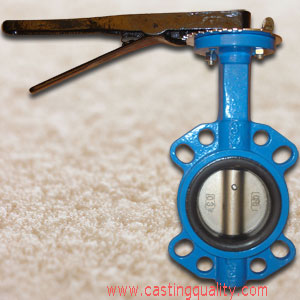
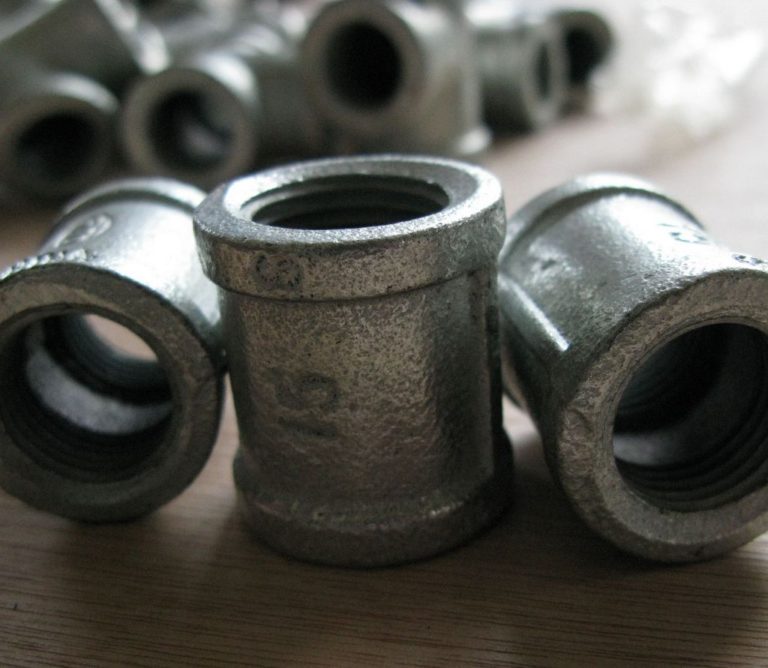
Related Casting Products

Physical Properties
EN 10213–2007+A1:2016
| Property | Value | Note |
|---|---|---|
| Density | 7.8 kg/dm³ | Test at 20 °C |
| Thermal Expansion | 13.0 ×10⁻⁶/K | Temperature range: 20–100 °C |
| Thermal Expansion | 13.8 ×10⁻⁶/K | Temperature range: 20–300 °C |
| Thermal Expansion | 15 ×10⁻⁶/K | Temperature range: 20–500 °C |
| Thermal Conductivity | 45 W/(m·K) | Test at 50 °C |
| Specific Heat | 460 J/(kg·K) | Test at 20 °C |
| Magnetic Property | Magnetic |
Chemical Composition
| Element | EN 10213Edition 2007+A1:2016 · wt.%Cast analysis | EN 10293Edition 2015 · wt.%Cast analysis | EN 10340Edition 2007 · wt.%Cast analysis |
|---|---|---|---|
| C | 0.17–0.23 | 0.17–0.23 | 0.17–0.23 |
| Si | ≤ 0.60 | ≤ 0.60 | ≤ 0.60 |
| Mn | 1.00–1.60 | 1.00–1.60 | 1.00–1.50 |
| P | ≤ 0.020 | ≤ 0.020[1] | ≤ 0.020 |
| S | ≤ 0.020[2] | ≤ 0.020[3] | ≤ 0.020[4] |
| Cr | ≤ 0.30 | ≤ 0.30[5] | ≤ 0.30[6] |
| Ni | ≤ 0.80 | ≤ 0.80 | ≤ 0.80[6] |
| Mo | ≤ 0.12 | ≤ 0.12[5] | ≤ 0.12[6] |
| Cu | ≤ 0.30 | ≤ 0.30[5] | ≤ 0.30[6] |
| V | ≤ 0.03 | ≤ 0.03[5] | ≤ 0.03[6] |
Notes
EN 10293 · Edition 2015
[1] P: A maximum phosphorus content of 0.025 wt.% is permitted by agreement between purchaser and manufacturer.
[3] S: For castings of ruling thickness <28 mm, sulfur up to 0.030 wt.% is permitted.
[5] Cr/Mo/Cu/V: Applies only where unspecified in unless otherwise agreed; no intentional addition except for finishing the heat.
EN 10213 · Edition 2007+A1:2016
[2] S: For ruling thickness < 28 mm, sulfur up to 0.030 wt.% is permitted.
EN 10340 · Edition 2007
[4] S: For castings of ruling thickness <28 mm, sulfur up to 0.030 wt.% is permitted.
[6] Cr/Ni/Mo/Cu/V: Cr + Mo + Ni + V + Cu ≤1.00 wt.%.
Heat Treatment
EN 10213–2007+A1:2016 · +N
| Step | Operation | Temperature |
|---|---|---|
| 1 | : normalizing | 900–980 °C[1] |
EN 10213–2007+A1:2016 · +QT
EN 10293–2015 · +N
| Step | Operation | Temperature | Cooling |
|---|---|---|---|
| 1 | : normalizing | 900–980 °C | air |
EN 10293–2015 · +QT
| Step | Operation | Temperature | Cooling |
|---|---|---|---|
| 1 | : quenching | 900–980 °C | air or liquid |
| 2 | : tempering | 610–660 °C | — |
EN 10340–2007 · +N
| Step | Operation | Temperature | Cooling |
|---|---|---|---|
| 1 | : normalizing | 900–980 °C | air |
EN 10340–2007 · +QT
| Step | Operation | Temperature | Cooling |
|---|---|---|---|
| 1 | : quenching | 900–980 °C | air or liquid |
| 2 | : tempering | 610–660 °C | — |
Notes
EN 10213 · Edition 2007+A1:2016
[1] +N: Treatment temperatures are given for information; required delivery condition is specified separately.
[2] +QT: Treatment temperatures are given for information; required delivery condition is specified separately.
Mechanical Properties
Conditions are not identical. Compare each stated condition and applicability separately.
| Property | EN 10213Edition 2007+A1:2016+N | EN 10213Edition 2007+A1:2016+QT | EN 10293Edition 2015+N[1] | EN 10293Edition 2015+QT[2] | EN 10340Edition 2007+N[3] | EN 10340Edition 2007+QT[4] |
|---|---|---|---|---|---|---|
| Yield Strength (Rp0.2) | ≥ 300 MPa[5] | ≥ 300 MPa[6] ≥ 270 MPa[7] ≥ 254 MPa[8] ≥ 244 MPa[9] ≥ 236 MPa[10] ≥ 225 MPa[11] ≥ 210 MPa[12] ≥ 189 MPa[13] | ≥ 300 MPa[14] | ≥ 300 MPa[15] | ≥ 300 MPa[16] | ≥ 300 MPa[17] |
| Tensile Strength | 480–620 MPa[5] | 500–650 MPa[6] | 480–620 MPa[14] | 500–650 MPa[15] | 480–620 MPa[16] | 500–650 MPa[17] |
| Elongation | ≥ 20 %[5] | ≥ 22 %[6] | ≥ 20 %[14] | ≥ 22 %[15] | ≥ 20 %[16] | ≥ 22 %[17] |
| Impact Energy | ≥ 27 J[18] | ≥ 27 J[19] | ≥ 27 J[20] ≥ 50 J[14] | ≥ 27 J[21] ≥ 60 J[15] | ≥ 27 J[22] ≥ 50 J[16] | ≥ 27 J[23] ≥ 60 J[17] |
Notes
EN 10293 · Edition 2015
[1] All properties in this column; +N: wall thickness ≤ 30 mm; Test block of relevant thickness; maximum test-block wall thickness 150 mm; Properties apply to the casting up to the specified maximum wall thickness; above this, foreseeable lowering shall be agreed.
[2] All properties in this column; +QT: wall thickness ≤ 100 mm; Test block of relevant thickness; maximum test-block wall thickness 150 mm; Properties apply to the casting up to the specified maximum wall thickness; above this, foreseeable lowering shall be agreed.
[14] Yield Strength (Rp0.2)/Tensile Strength/Elongation/Impact Energy; +N: Room temperature
[15] Yield Strength (Rp0.2)/Tensile Strength/Elongation/Impact Energy; +QT: Room temperature
[20] Impact Energy; +N: Test at -30 °C
[21] Impact Energy; +QT: Test at -40 °C
EN 10340 · Edition 2007
[3] All properties in this column; +N: wall thickness ≤ 30 mm; Test block of relevant thickness; maximum thickness 150 mm; Yield and tensile strength also apply to the casting up to the maximum relevant wall thickness.
[4] All properties in this column; +QT: wall thickness ≤ 100 mm; Test block of relevant thickness; maximum thickness 150 mm; Yield and tensile strength also apply to the casting up to the maximum relevant wall thickness.
[16] Yield Strength (Rp0.2)/Tensile Strength/Elongation/Impact Energy; +N: Room temperature
[17] Yield Strength (Rp0.2)/Tensile Strength/Elongation/Impact Energy; +QT: Room temperature
[22] Impact Energy; +N: Test at -30 °C
[23] Impact Energy; +QT: Test at -40 °C
EN 10213 · Edition 2007+A1:2016
[5] Yield Strength (Rp0.2)/Tensile Strength/Elongation; +N: wall thickness ≤ 30 mm; Properties verified on test blocks of thickness up to 150 mm; applicability to casting wall thickness as stated. Larger governing thickness requires agreement.; Room temperature
[6] Yield Strength (Rp0.2)/Tensile Strength/Elongation; +QT: wall thickness ≤ 100 mm; Properties verified on test blocks of thickness up to 150 mm; applicability to casting wall thickness as stated. Larger governing thickness requires agreement.; Room temperature
[7] Yield Strength (Rp0.2); +QT: Test at 100 °C; Verification of elevated-temperature yield values is subject to agreement at enquiry and order.
[8] Yield Strength (Rp0.2); +QT: Test at 200 °C; Verification of elevated-temperature yield values is subject to agreement at enquiry and order.
[9] Yield Strength (Rp0.2); +QT: Test at 300 °C; Verification of elevated-temperature yield values is subject to agreement at enquiry and order.
[10] Yield Strength (Rp0.2); +QT: Test at 350 °C; Verification of elevated-temperature yield values is subject to agreement at enquiry and order.
[11] Yield Strength (Rp0.2); +QT: Test at 400 °C; Verification of elevated-temperature yield values is subject to agreement at enquiry and order.
[12] Yield Strength (Rp0.2); +QT: Test at 450 °C; Verification of elevated-temperature yield values is subject to agreement at enquiry and order.
[13] Yield Strength (Rp0.2); +QT: Test at 500 °C; Verification of elevated-temperature yield values is subject to agreement at enquiry and order.
[18] Impact Energy; +N: Test at -30 °C; Test block; maximum thickness 150 mm; Specified low-temperature impact requirement
[19] Impact Energy; +QT: Test at -40 °C; Test block; maximum thickness 150 mm; Specified low-temperature impact requirement
Welding Conditions
EN 10293–2015
| Requirement | Value |
|---|---|
| Preheat | 20–150 °C[3] |
| Interpass Temperature | ≤ 350 °C |
| Post-weld Heat Treatment | No post-weld heat treatment necessary |
EN 10340–2007
| Requirement | Value |
|---|---|
| Preheat | 20–150 °C[4] |
| Interpass Temperature | ≤ 350 °C |
| Post-weld Heat Treatment | No post-weld heat treatment necessary |
Notes
EN 10213 · Edition 2007+A1:2016
[1] Preheat: Production welding by the foundry; ferritic/martensitic guidance is informative.; Preheat temperature depends on casting geometry, thickness and climatic conditions.
[2] Interpass Temperature: Production welding by the foundry; ferritic/martensitic guidance is informative.
EN 10293 · Edition 2015
[3] Preheat: Preheat depends on casting geometry, thickness and climatic conditions.
EN 10340 · Edition 2007
[4] Preheat: Preheat depends on casting geometry, thickness and climatic conditions.
Applications
Typical casting applications include pump and valve castings; steam boilers and heat exchangers; marine equipment; and water-turbine components such as Francis blades, runner crowns and wicket gates.
Last Updated: October 13, 2026